Why Men's Supplement Ads Overpromise
Present bias makes 'results by next week' land, even when the brand's own FAQ says three months.
Scroll past enough men's-vitality ads and a pattern emerges: dramatic before-and-after language, urgency countdowns, testimonials promising results in days. Almost none of it matches how the ingredients inside these products actually behave, according to the research on them. Here's why that gap exists, and why it works on smart people anyway.
The bias that makes 'instant results' land
Behavioral economists call it present bias — the well-documented tendency to weight immediate outcomes far more heavily than outcomes weeks or months away, even when we rationally know the longer timeline is the honest one. An ad promising visible change by next week doesn't need to be true to work. It just needs to activate a psychological preference most people carry regardless of how skeptical they think they are.
This is precisely why a brand's own FAQ can say “benefits build after roughly three months” in the fine print while the ad creative two clicks upstream shows a six-pack transformation timestamped one week apart. Both statements can technically coexist on the same brand's materials, because they're targeting two different cognitive systems — the deliberate, skeptical one that reads FAQs, and the fast, associative one that responds to imagery.
Why the science-sounding language works too
There's a second, related effect: authority transfer. When an ad cites a real botanical name — Muira Puama, Tribulus Terrestris, Ashwagandha — the specificity itself reads as credibility, even when the actual research on that ingredient is thinner, older, or measures something different than what's implied. A 2002 study on maca and sexual desire, for instance, specifically found no link to serum testosterone — a detail that rarely survives the trip from PubMed abstract to sales page headline.
What this means for reading any vitality-product ad
None of this means the ingredients are fake or the product doesn't work at all. It means the marketing layer and the evidence layer are frequently optimized for different audiences — one for clicking, one for defending the claim if challenged. A few practical filters help separate them:
- Does the ad's timeline match the brand's own FAQ or fine print? If not, trust the fine print
- Is a named ingredient's citation about the finished product, or just the raw ingredient in isolation?
- Are individual milligram doses disclosed, or is everything folded into one proprietary-blend number?
- Would the claim survive being read back to you slowly, out of the ad's visual context?
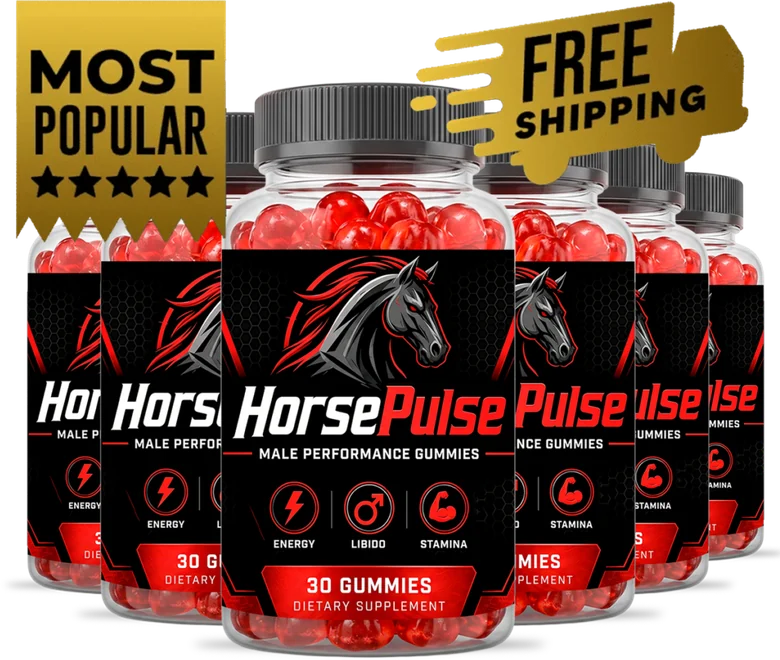
We apply exactly this filter to HorsePulse itself in the label-vs-sales-page gap — the same product, compared honestly against its own marketing.
The honest caveat
Present bias and authority transfer are real, well-studied psychological patterns — not an accusation that any specific brand is acting in bad faith. Ad creative optimized for attention and a brand's own product FAQ can both be technically accurate while creating very different impressions. Reading past the imagery to the actual disclosed facts is the only reliable defense.